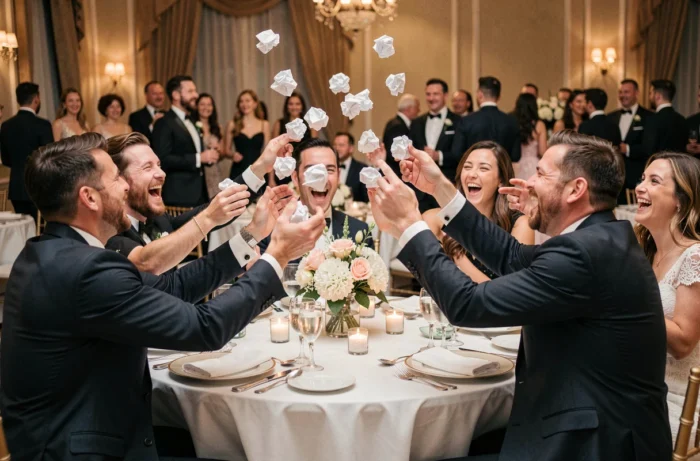
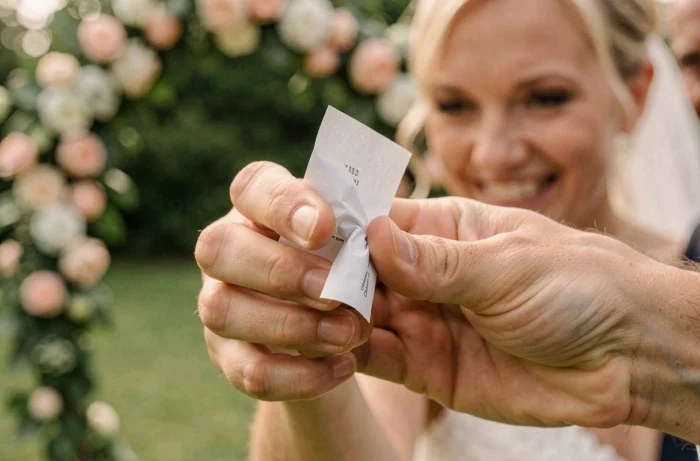
Among wedding animations, the blooper video remains one of the most anticipated surprises by the newlyweds. The principle is simple: each guest draws a paper containing a question or instruction, answers it on camera, and everything is edited into a single video projected during the evening. The quality of the result depends less on the equipment used than on the method of collecting testimonials and the care taken in editing.
Collecting video testimonials: what makes the difference between a smooth edit and a sound chaos
Most wedding blooper compilations found online suffer from the same problem: uneven sound from one testimonial to another. One guest films in a quiet hallway, the next speaks in the middle of the dance floor. The final edit alternates between inaudible segments and correct sequences.
The determining variable is not the camera, but the sound environment at the time of recording. Filming in an enclosed space, even a small one, with a neutral background produces a usable result. Filming outdoors with wind or near speakers makes the testimonial unusable, regardless of the phone.
Some organizers choose to collect contributions in advance of the big day, through messages sent by guests from their homes. This approach solves the noise problem but removes the spontaneity of the moment. The funniest wedding blooper videos often combine both: testimonials filmed in advance for quality, and a few spontaneous takes for emotion.
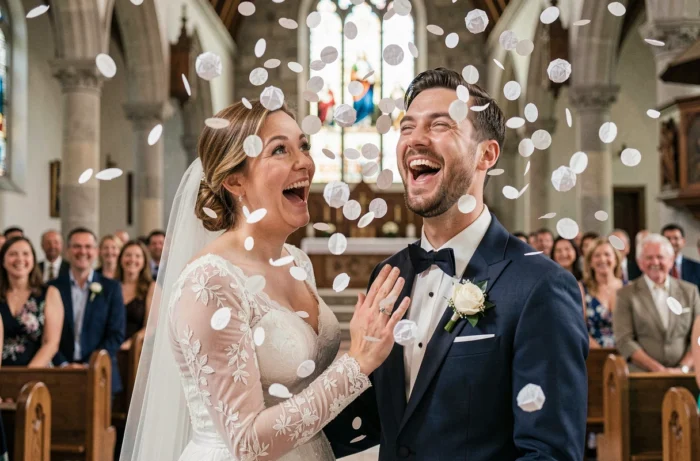
Format of questions on paper balls: a comparison of approaches
The choice of questions or instructions written on the papers determines the tone of the final video. Three formats dominate in the most shared videos online.
| Question Format | Typical Example | On-screen Result | Main Risk |
|---|---|---|---|
| Emotional open question | “What is your best memory with the newlyweds?” | Long, sometimes touching responses | Length, repetitions among guests |
| Quirky instruction | “Imitate the groom when he orders at a restaurant” | Short, funny, varied sequences | Some guests refuse to play along |
| Closed-choice question | “Who snores the loudest?” | Quick responses, fast pace | Little material for editing |
The videos that accumulate the most views mix these three formats. Alternating styles prevents viewer fatigue and gives the editor enough material to vary the rhythm. Planning about a dozen different questions for around thirty filmed guests helps avoid five people giving the same answer.
Quirky instructions: the format that generates the most laughs
The most viral compilations almost all rely on imitation or situational instructions. Asking an uncle to imitate the bride on the phone or a witness to reenact the marriage proposal produces naturally funny sequences.
This format works because it shifts the focus from speech to physical play. Shy guests, often blocked in front of an open question, are more willing to engage with a concrete instruction. The result on screen is also more dynamic than a static shot of someone speaking.
Wedding blooper video editing: recurring mistakes to avoid
Editing transforms dozens of disparate clips into a coherent film. Three mistakes recur in the majority of amateur videos circulating online.
- Total duration too long: beyond ten minutes, guests’ attention wanes. The best edits condense each testimonial into a few seconds and keep only the punchline or the highlight moment.
- Background music too loud: the background sound must remain subdued during speaking parts. Raising the volume only during transitions between testimonials helps maintain a rhythm without drowning out voices.
- Absence of titles or first names: without identification, the newlyweds struggle to recognize certain guests filmed from afar or in low light. A simple first name at the bottom of the screen is sufficient.
An edit of five to eight minutes produces the best effect during the screening. This duration allows enough space for about twenty testimonials without losing the audience’s attention.
QR code on invitations and remote collection: a recent trend
Some services offer to integrate a QR code directly on wedding invitations. By scanning the code, guests access a page where they can record their video testimonial from their phone, at their own pace.
This method solves two problems at once. It removes the logistical constraint of filming everyone on the big day, and it ensures consistent sound quality since each guest records in their own environment.
AI assistance for messages
Wedding card platforms now offer to automatically generate a congratulatory text from a few keywords provided by the guest (desired tone, type of relationship, anecdote). This text can then be read on camera for the blooper video.
The benefit is concrete: less inspired guests find it easier to participate when they have a written base. The boundary between card messages and blooper video messages becomes blurred, as the same text serves both formats.
The final result of a blooper video depends more on a series of technical choices (sound, question format, editing duration) than on a high budget or a professional videographer. The videos that circulate the most share a common point: they do not exceed a few minutes, alternate styles, and let the guests’ personalities do the work.