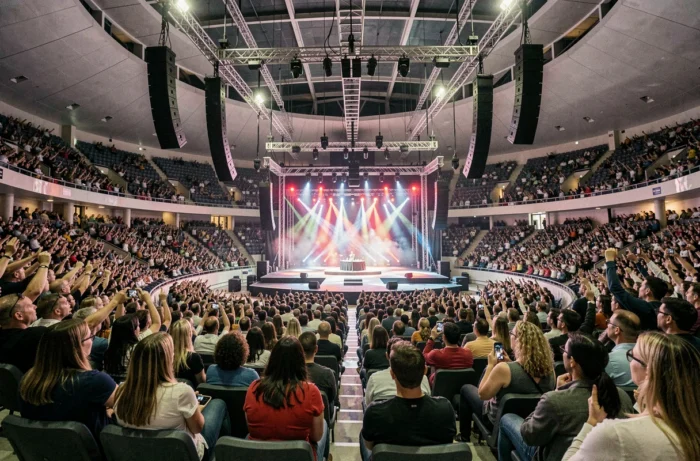
When booking for a concert at the Accor Arena, the natural instinct is to aim for the front rows or the pit. The problem is that proximity to the stage does not guarantee good sound. At Bercy, the acoustic quality primarily depends on your positioning relative to the sound control room and the type of staging set up for each tour.
Sound control room axis at the Accor Arena: the area that tickets do not highlight
Sound engineers mix from a console located at the center of the floor. This is their reference listening point, where the balance between vocals, bass, and stereo is calibrated with the utmost precision.
In practice, seats located in the axis of the control room offer the most faithful sound reproduction. You can perceive the spatialization as the mixer designed it, without a bass dominance or loss of detail in the highs. These locations are generally found in the middle of the floor, slightly back from the stage.
A common trap: the front rows of the pit or floor suffer from stage returns and an unbalanced sound pressure. The bass saturates, and the vocals get drowned out. This helps explain why some spectators leave disappointed even though they paid for the highest category. To better understand the seating arrangement at Bercy Arena, you need to think in terms of acoustic axis rather than distance to the stage.

Intermediate stands at Bercy: the sound and view compromise that few spectators anticipate
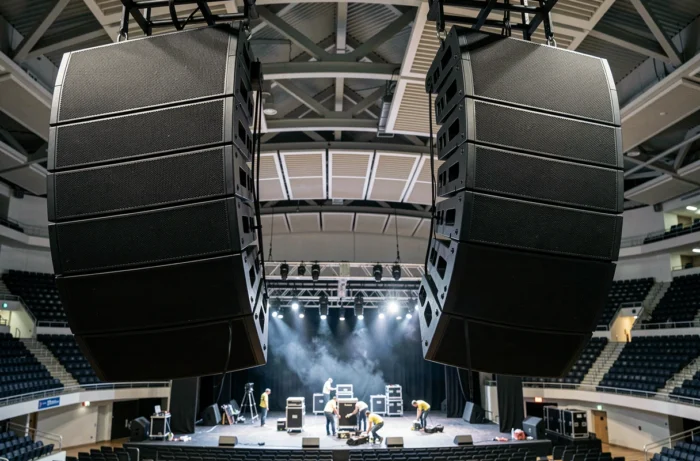
The lower and intermediate stands facing the stage are often an underestimated alternative. The elevation naturally corrects the listening angle and allows the sound from the main speakers (the suspended line arrays) to arrive more directly, without bouncing off the floor of the pit.
Several reviews from spectators on platforms like Aviewfrommyseat or UneVueDeMaPlace confirm this observation. The intermediate stands regularly come up as a good compromise between sound quality and overall show visibility. You can enjoy the lighting effects in full width, without the grazing effect of the low side blocks.
The upper stands offer a panoramic view, but the distance from the sound sources leads to a loss of presence and detail. Feedback on this point varies depending on configurations, but the general trend remains clear: the higher you go, the more the sound loses physical impact.
Side blocks: beware of the angle relative to the screens and speakers
A block classified as premium on the side of the stage can pose two simultaneous problems. The angle relative to the LED screens becomes grazing, which degrades visual readability. And on the sound side, you find yourself outside the appropriate coverage of the line arrays, which are oriented towards the center and back of the room.
- Low side blocks close to the stage suffer from an unfavorable listening angle and masking by sound structures
- Mid-height side blocks partially correct the angle due to elevation but remain set back from the central axis
- For a concert with a classic frontal staging, favoring a central block even in a lower category often yields better sound results than a premium side
Frontal stage, catwalk, or 360 configuration: the seating plan changes everything at Bercy
The stage layout at the Accor Arena varies radically from one tour to another. An ideal placement for a concert on a frontal stage can become mediocre in a 360-degree configuration. You don’t choose your seats the same way depending on the setup.
Concert on a frontal stage or with a catwalk
This is the most common configuration. The stage occupies one side of the room, sometimes extended by a catwalk towards the floor. In this case, the central axis facing the stage remains the best acoustic area. Floor seats located on either side of the catwalk also benefit from good sound coverage, provided they are not too close to the side speakers.
Concert in a 360-degree configuration
When the stage is set up in the center of the room, the sound distribution is rethought with speakers oriented in all directions. The lower side or back stands then often provide a more coherent sound than the upper front stands, as they capture direct sound without too much reverb coming from the ceiling.
Before booking, it is advisable to check the type of staging planned. This information is sometimes available on the artist’s social media or fan forums as soon as the tour is announced.
Seat preview tools for a concert at the Accor Arena
Platforms like Aviewfrommyseat allow you to view photos taken from specific locations by previous spectators. This is a concrete way to check what you will see and, indirectly, to deduce the distance to the sound sources.
- Look for photos corresponding to the same type of stage configuration (frontal, 360) as the concert in question
- Compare feedback between central intermediate stands and front pit rows for the same event
- Cross-reference with the seating plans from ticket offices, which display price categories but not the actual acoustic quality
An official seating plan never shows sound coverage. Price categories reflect proximity to the stage and presumed visibility, not acoustic balance. This is precisely why cheaper seats located in the axis of the control room or in central intermediate stands often outperform locations sold at the highest price.
The choice of a seat at Bercy Arena for optimal sound comes down to two checks: identifying the axis of the control room (center of the floor, slightly back) and confirming the type of stage planned for the reserved date. These two parameters weigh more than the price category displayed on the ticket.