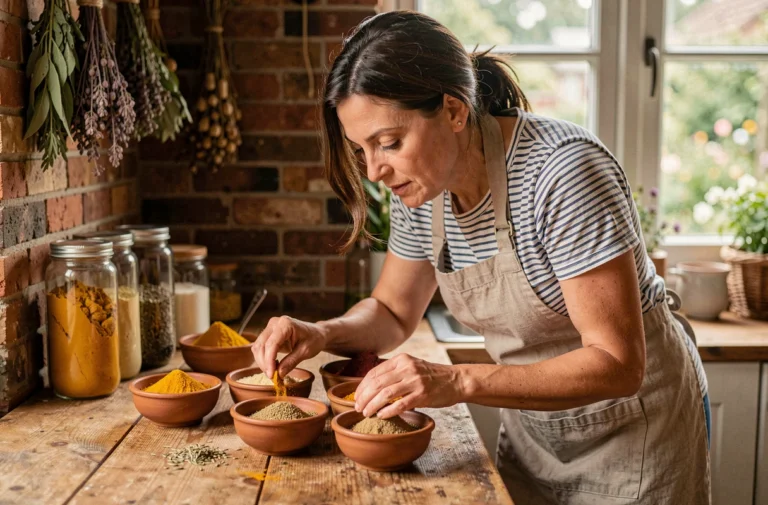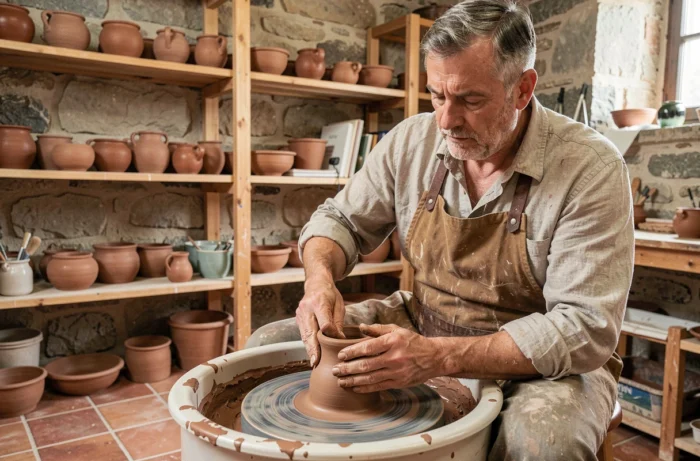
French craftsmanship represents a dense economic fabric, composed of hundreds of artisanal trades spread across the entire territory. Behind the unique objects made of wood, leather, or glass lies a contrasting reality: an exceptional know-how recognized worldwide, but a sector subjected to increasing cyclical tensions.
The back-to-school barometer from CMA France, published on September 3, 2026, reveals that artisans are now more numerous in their pessimism than optimism regarding the future of their businesses, with a significant decline in investment and hiring intentions.
Electronic invoicing and simplification law: what changes for art workshops
The transition to electronic invoicing, mandatory since September 1, 2026, constitutes a concrete point of friction for artisans. Le Figaro reported on September 3, 2026, that this deadline comes at a particularly bad time in an already concerning context for artisan organizations. For a creative workshop that manages a few dozen invoices per month, the technical adaptation and the cost of compatible software are not negligible.
The economic life simplification law, highlighted by the Institute for French Know-How at the end of August 2026, introduces parallel mechanisms for mediation and sectoral rulings. These measures aim to secure artisans on issues such as taxation, public aid, or exports. Field feedback varies on this point: some workshops see it as a step forward, while others view it as an additional administrative layer in an already busy daily life.
Platforms like lateliersingulier.fr allow users to discover French artisanal creations and directly support the workshops that keep these skills alive every day.
Artisan craftsmanship in France: a market without a unified showcase
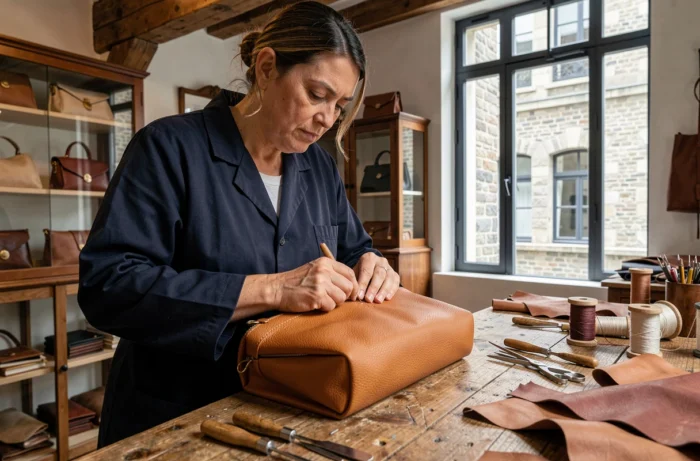
Unlike other cultural sectors, French artisan craftsmanship does not have a central aggregator that would make the entire offering visible. Artisans sell through their own shops, occasional fairs, specialized galleries, or fragmented online marketplaces. This dispersion complicates the task for consumers looking for a unique object.
Several initiatives are attempting to structure this visibility. The European Days of Art Trades (JEMA) provide an annual window into the workshops. The Institute for French Know-How works to document and promote art trades. The chambers of crafts and artisan trades (CMA) play a role as local intermediaries. However, none of these structures alone constitutes a catalog where one could compare, choose, and buy.
The result is paradoxical: France has one of the widest directories of art trades in the world, but the connection between artisans and buyers remains artisanal itself.
Artisanal objects in wood, leather, or glass: what distinguishes the unique piece
Buying a French artisanal object means acquiring a piece whose value rests on specific criteria. The difference with a manufactured product goes beyond price or aesthetics.
- The traceability of the gesture: an artisan masterfully controls the entire chain, from the choice of raw material to the finishing touches. A cabinetmaker selects his wood species, a leatherworker chooses his hides, a glassmaker picks his pigments. This mastery guarantees a coherence that industrial production cannot replicate.
- Custom adaptation: unlike a standardized product, the artisanal object conforms to the specific demands of the client, whether regarding dimensions, colors, or particular finishes.
- Durability through reparability: an object handmade by an identified artisan can be restored, adjusted, or complemented years after purchase. This lasting connection between the creator and the object is a concrete argument against planned obsolescence.
These elements justify a price positioning that is often higher. The available data do not allow for setting a range applicable to all trades, as the gaps are vast between a hand-turned pottery piece and a piece of goldsmithing.
Transmission of artisanal know-how: the question of succession
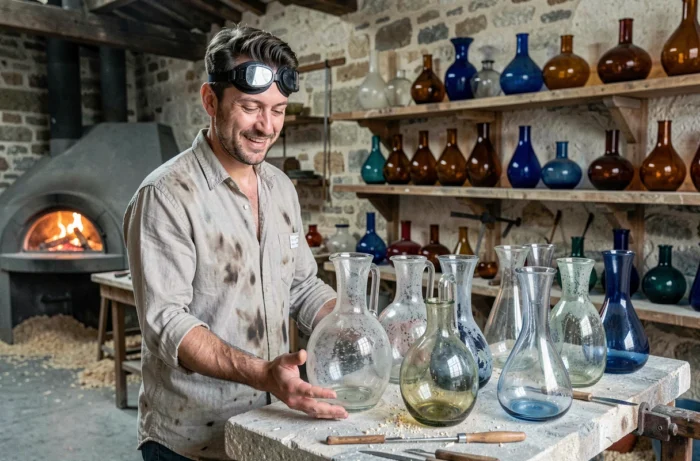
The CMA France barometer of September 2026 shows a notable decline in hiring intentions in the artisan sector. For a young person considering training in cabinetmaking, stone carving, or gold leafing, the signal sent by the market is ambiguous: skills are in demand, but workshops hesitate to hire in an uncertain economic climate.
Transmission is not limited to initial training. An experienced artisan dedicates years to perfecting skills that school programs can only outline. Apprenticeship and mentorship in workshops remain the main pathways to acquire true technical mastery.
- Specialized schools (National Institute of Art Trades, dedicated vocational high schools) provide the theoretical foundation and material discovery.
- Workshop apprenticeship, over several years, allows for the integration of fine gestures that only repetition can perfect.
- Initiatives like the JEMA and open house days create vocations, but the transition to establishment remains a path fraught with administrative and financial obstacles.
Exceptional French craftsmanship finds itself at a crossroads where cultural recognition has never been stronger, while economic conditions undermine the structures that support it. The quality of an artisanal object is measured by the sustainability of the workshop that produced it, and this sustainability today depends as much on the order book as on the regulatory framework.