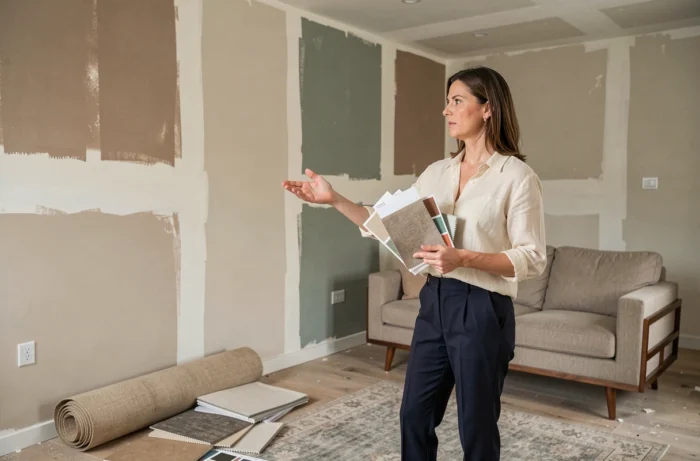
A sofa that no longer matches the rest, dated walls, flat lighting: we postpone the living room makeover because we don’t know how much it will cost. The price range depends less on the size than on the level of intervention requested from the interior decorator. Between a simple consultation visit and a complete project with follow-up of the craftsmen, the budget can vary from simple to tenfold.
Cost of a living room decorator: what each service actually covers
People often confuse the price of a “decorating consultation” with that of a complete project. The difference lies in the deliverable and the time spent.
A consultation visit lasts one to two hours and results in oral recommendations or a short document: color palette, rearrangement of existing furniture, purchase suggestions. The average hourly rate for an interior decorator ranges from 60 to 100 euros excluding tax per hour according to market data.
The next step, often called “project study,” involves mood boards, a scaled layout plan, and a list of referenced products with suppliers and prices. For a living room, this study represents a significantly more engaging budget, charged per square meter or as a flat fee per room.
When we add site monitoring and coordination of craftsmen (painter, carpenter, flooring installer), the service shifts to a percentage of the total cost of the work, generally between 10 and 15%. This is when the budget increases, but it’s also when we avoid costly mistakes. Before committing, you can contact the decorator decoserotonine to obtain a quote tailored to the desired area and scope of intervention.

Living room makeover: the expense items that affect the bill
The cost of the decorator is just one part of the budget. The living room makeover also includes supplies, craftsmen, and sometimes new furniture. Three items deserve attention.
Painting and wall coverings
Repainting a standard-sized living room remains the most cost-effective transformation lever. The price depends on the number of coats, ceiling height, and the chosen finish. High-end paint costs significantly more than entry-level paint, but the decorator often negotiates professional rates with their suppliers.
Lighting and textiles
Lighting is the most underestimated item in a makeover. Replacing a single ceiling light with a three-point lighting plan (pendant, floor lamp, reading light) radically changes the atmosphere. Regarding textiles, curtains, cushions, and rugs absorb a variable portion of the budget depending on the selected materials.
Furniture kept or replaced
The decorator assesses what can stay, what can be refurbished, and what needs to go. Keeping a structurally sound sofa but having it reupholstered costs less than buying a new one, provided the chosen fabric is suitable for daily use. A good diagnosis of the existing furniture significantly reduces the overall bill.
Flat fee per square meter or hourly rate: which billing method for a living room
Decorators offer several pricing methods. The choice of the right method depends on the scope of the project.
- The hourly rate is suitable for one-off coaching or a consultation visit. You pay for the time spent, nothing more. It’s appropriate when you just want to unblock a situation (color choice, layout).
- The flat fee per square meter applies to complete studies. Rates decrease in tiers as the area increases: a living room of less than 40 m² costs proportionally more per square meter than an open space of 80 m².
- The percentage on work comes into play when the mission includes site monitoring. This method aligns interests: the decorator has every incentive to optimize costs to stay within the approved budget.
- The commission on purchases exists with some professionals who earn a margin on the furniture and supplies ordered for the client. Feedback varies on this point: it’s better to clarify this item right from the first meeting.

Living room makeover prices in 2026: the impact of inflation on quotes
Between 2022 and 2023, the rates for decoration services experienced the same pressure as the rest of the construction sector: rising materials, travel, and subcontractors. Since 2024, the dynamics have calmed down. INSEE indicates that the annual inflation rate for consumer prices dropped from about 4.9% in September 2023 to about 1.3% in December 2024, then around 1.6% in early 2025.
In concrete terms, decoration quotes are still increasing but at a moderate pace. Another factor weighs in 2026: the cost of professional civil liability insurance for decorators coordinating work. This charge is reflected in their fees, especially when they go beyond simple advice to manage painting or light carpentry interventions.
For a living room, the cumulative increase remains manageable if you compare several quotes. Always requesting a detailed quote by item (fees, supplies, craftsmen) allows you to identify where there is room for negotiation.
Comparing quotes from an interior decorator: pitfalls to avoid
A quote that displays a total amount without itemization often hides surprises. Here’s what to check before signing.
- The distinction between the decorator’s fees and the cost of the work. Some flat fees include both, others do not.
- Travel expenses, charged extra by many professionals working outside large urban areas.
- The exact scope of the mission: a “living room makeover” can refer to a simple layout plan or a complete decorative renovation with furniture purchases.
Comparing two quotes only makes sense if the scope of the service is identical. A low flat fee without site monitoring will ultimately cost more if you have to manage the craftsmen yourself and correct mistakes.
The rate of an interior decorator for a living room primarily depends on what you ask them to do. A one-off consultation remains affordable, while a complete project with coordination requires a more substantial budget but secures the result. In any case, a detailed quote item by item remains the only reliable document for decision-making.