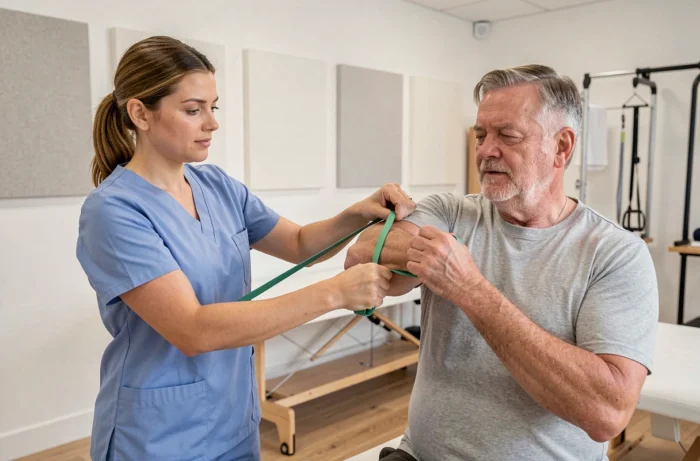
Physiotherapy in France is undergoing a period of structural changes that go far beyond just the technological aspect. Between a complete overhaul of the nomenclature of procedures, the integration of physiotherapists into the national prevention system, and the arrival of digital tools in practices, several indicators allow us to measure where the profession truly stands.
Nomenclature of procedures and regulatory framework: what has changed between 2024 and 2026
The most concrete transformation for professionals does not come from technology, but from an administrative overhaul. Amendment 7 to the national convention replaced the old generic nomenclature, based on key letters like AMS and AMC, with a descriptive nomenclature structured by pathology and body region. Each procedure is now identified by a unique key letter accompanied by coefficients with two decimal places.
Amendment 8, published in December 2025, extends this logic with targeted revaluations. This framework modifies how practitioners code, bill, and justify their sessions to the Health Insurance. Professionals who follow these regulatory developments on physio-mag.com have direct access to updates on coding and analyses of the conventional texts.
| Element | Before (old nomenclature) | Since Amendment 7 |
|---|---|---|
| Key letters | AMS, AMC (generic) | Unique key letter per procedure |
| Identification of the procedure | Broad categories | Coefficients with two decimal places, by pathology and body region |
| Coding logic | Minimal description | Detailed descriptive nomenclature |
| Revaluations | One-off adjustments | Targeted by type of procedure (Amendment 8, December 2025) |
This table illustrates a change in philosophy: the remuneration of physiotherapists is now based on the clinical complexity of each procedure, not on a flat-rate grid.
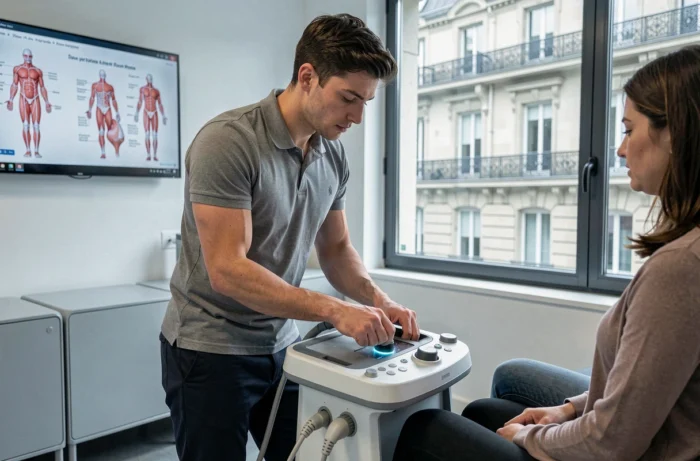
Population prevention: physiotherapists in the Mon bilan prévention system
Starting in October 2026, physiotherapists will join the professionals authorized to conduct “Mon bilan prévention” appointments created by Health Insurance. They will be added to the doctors, nurses, pharmacists, and midwives already integrated into the system since 2024.
This program targets four age groups: 18-25 years, 45-50 years, 60-65 years, and 70-75 years. Each consultation lasts 30 to 45 minutes and is fully covered. For patients, the benefit focuses on the prevention of musculoskeletal disorders and sedentariness. For the profession, this represents a repositioning: the physiotherapist becomes a structured actor in prevention, within a regulated and funded framework.
This evolution of role should be viewed in parallel with the demographic data of the profession. Despite an increasing number of professionals, territorial inequalities persist. Some areas remain under-resourced, raising the question of real access to these prevention assessments depending on the patient’s place of residence.
Connected sensors and patient data in rehabilitation
On the technological side, the adoption of wearable sensors is progressing in practices. These devices measure in real-time movements, posture, or muscle activity during rehabilitation exercises. Their interest lies in two mechanisms:
- The continuous adaptation of treatment based on data collected at each session, allowing for modulation of exercise difficulty according to the measured progress of the patient
- The early detection of biomechanical imbalances or injury risks, used in prevention among active or athletic populations
- Remote monitoring between two sessions, with data transmission to the practitioner to adjust the program without waiting for the next appointment
Connected tools do not replace manual clinical evaluation, but complement it with objective data. However, their integration raises concrete questions: the cost of equipment for a private practice, compatibility with existing management software, and the protection of patients’ health data.
Artificial intelligence and clinical decision support
Artificial intelligence operates mainly at two levels. First, in the analysis of data from sensors and wearables, where algorithms identify compensation or progression patterns that the human eye may miss. Second, in the personalization of rehabilitation protocols, with exercise suggestions tailored to the patient’s profile.
Current AI tools function as decision support assistants, not as autonomous prescribers. The physiotherapist retains clinical control. The regulatory question, particularly regarding liability in the event of algorithmic errors, remains an open topic within the French framework.
Virtual reality in neurological and orthopedic rehabilitation
Virtual reality finds its most documented application in neurological rehabilitation (post-stroke, head injuries) and orthopedic rehabilitation. The principle is based on immersing the patient in interactive environments that stimulate neuroplasticity and increase engagement during sessions.
Scenarios allow, for example, working on balance on uneven terrain or walking under simulated conditions. Therapeutic immersion enhances functional recovery by maintaining the patient’s motivation on often long and repetitive protocols.
Rehabilitation centers adopt these technologies more quickly than private practices, due to the cost of equipment and the space required. The equipment gap between hospital facilities and city practices constitutes a factor of disparity in the care offer.
Continuing education and access to the diploma: developments to watch
The obligation of continuing professional development (CPD) pushes practitioners to train in new tools. Training gradually incorporates modules on rehabilitation technologies, the use of patient data, and AI-assisted protocols.
Moreover, the Council of State has been consulted on issues related to the authorization to practice and the delineation of procedures between physiotherapists and osteopaths. These legal arbitrations shape the future contours of the profession and directly influence the innovations that practitioners can integrate into their practice.
French physiotherapy is simultaneously transforming in regulatory, preventive, and technological aspects. The descriptive nomenclature and entry into Mon bilan prévention redefine the intervention scope of the physiotherapist, while digital tools change how clinical data is collected and utilized. The main challenge remains equitable access to these advancements across the entire territory.