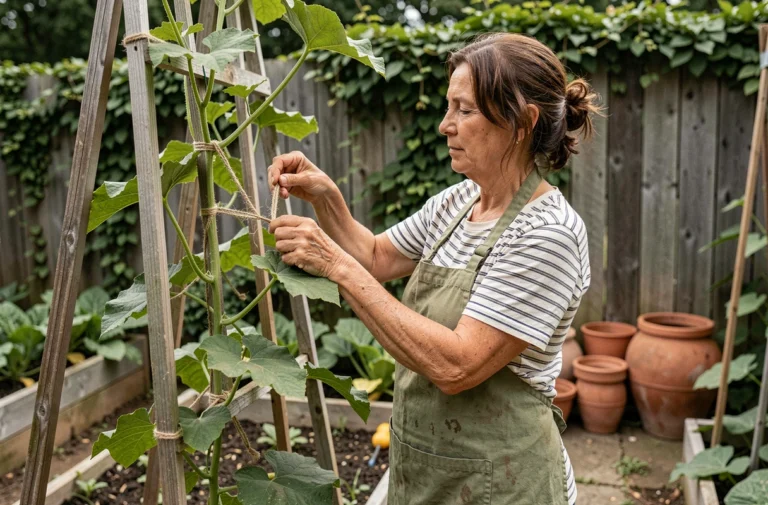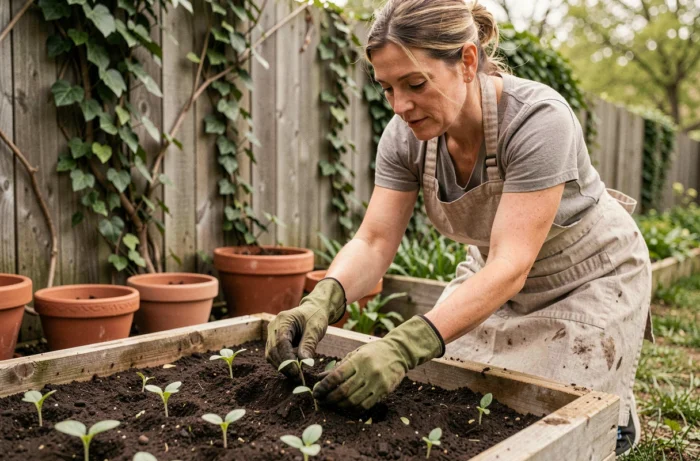
A garden that works twelve months a year relies on structural and soil choices, not on the accumulation of plants. We often observe designs intended for spring that visually collapse by November, due to a lack of persistent framework and coherent management of organic materials.
Management of garden biowaste and sorting obligation from 2024
Since January 1, 2024, source sorting of biowaste, including all garden waste (mowing, leaves, branches), is mandatory for individuals in France, as part of the AGEC law. Communities must offer at least one local management or separate collection solution.
This regulatory framework changes the game for landscaping. Planning a composting area from the design stage of the garden plan is no longer optional. We recommend integrating a dedicated zone, partially shaded, easily accessible from the flower beds and vegetable garden, to transport pruning and mowing residues without logistical effort.
A well-positioned composter reduces trips, limits the volume of green waste to be removed, and produces free organic amendment. This aspect, often overlooked in landscaping plans, is crucial for soil fertility in the long term. Several techniques for managing garden residues are detailed in the articles from Conseil Jardin, with approaches suited to each surface.
Soil and substrate choices for a sustainable landscaped garden
The quality of the soil determines the success of any landscaping much more than the choice of plants. Before any planting, a granulometric analysis and pH test guide decisions.

A compact clay soil retains water in winter and cracks in summer. In this case, adding ground organic matter over several seasons improves the structure without resorting to a total soil replacement. Mineral mulching (pumice, schist) complements the surface setup for circulation areas and terrace edges.
Lawns require a draining substrate. Mixing coarse sand with the existing soil to a sufficient depth prevents stagnation, the main cause of decline in ornamental lawns. For perennial flower beds, a slightly acidic to neutral substrate is suitable for most hardy species available in nurseries.
Adapting the substrate to garden zones
- Vegetable garden area: loose soil enriched with homemade compost, crop rotation to preserve microbial life and limit soil pathogens.
- Ornamental beds: organic mulching (wood chips, bark) renewed every autumn, which decomposes slowly and continuously nourishes the soil.
- Terrace edges and paths: stabilized compacted substrate covered with gravel or slabs laid on a sand bed, for minimal maintenance and effective drainage.
Watering restrictions and designing a water-efficient garden
Drought orders do not treat ornamental lawns and family vegetable gardens the same way. In heightened alert, watering of ornamental lawns is prohibited, while watering of the vegetable garden remains allowed. This distinction should guide your landscaping choices from the planning phase.
We recommend reducing the lawn area in favor of persistent ground covers that are less water-intensive (thym serpolet, sedum, fine fescue). A garden structured around dry zones and irrigated zones withstands repeated heat waves better, which we now experience every summer.
Concrete techniques to limit watering
Buried drip irrigation, fed by a rainwater collection tank, targets the roots without surface waste. Coupling this system with thick organic mulching significantly reduces evaporation.
A common mistake is to water little but often. Deep and spaced watering forces roots to go deeper, making plants more self-sufficient. During heat waves, a generous watering every four to five days is better than superficial daily watering that keeps roots near the surface.
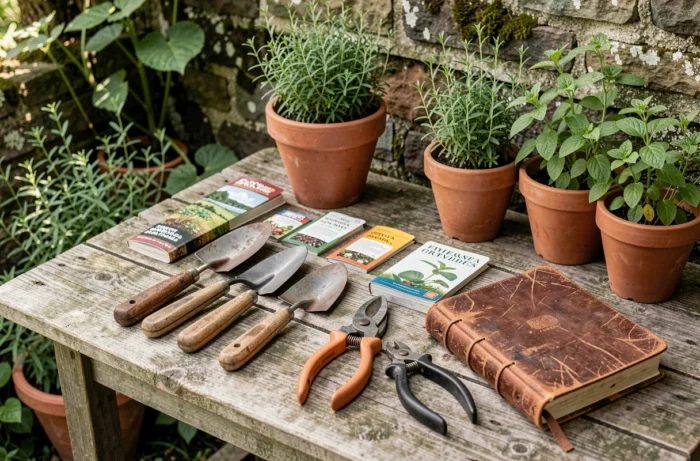
Structuring the space with persistent elements for every season
A garden that is readable in January as well as in July relies on a framework of persistent plants and built structures. Mineral elements (walls, wooden borders, gabions) define volumes when deciduous plants are bare.
We favor a proportion of at least one-third of evergreens in mixed beds. Boxwood, yew, osmanthus, photinia, or eleagnus ensure winter plant presence. Ornamental grasses (miscanthus, stipa) maintain their dry silhouette until late winter and add movement.
Planning blooms across four seasons
The goal is not to make everything bloom at the same time. Spreading blooms in successive waves ensures continuous visual interest:
- Winter: hellebores, winter jasmine, witch hazel for color and fragrance when the garden seems asleep.
- Spring: naturalized bulbs (daffodils, crocuses) followed by early perennials (perennial geraniums, euphorbias).
- Summer-autumn: salvias, asters, rudbeckias, and grasses in full bloom, extending interest until the first frosts.
This bloom calendar also conditions the choice of garden furniture and living areas. A southwest-facing terrace will be used from spring to autumn, while a sheltered corner near a south-facing wall can serve as a resting place even in winter, provided fragrant winter-blooming plants are installed.
Designing a garden for all year round is about planning, not corrective maintenance. A plan that integrates biowaste management, soil nature, water constraints, and bloom succession creates a space that ages well, season after season, without heavy interventions.