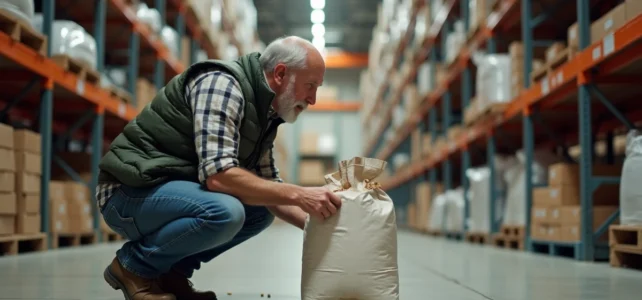
The wood pellet market experiences regular price fluctuations, and DIY stores are engaged in a pricing battle over this now common fuel. Brico Dépôt is among the most closely monitored distributors by owners of pellet stoves and boilers, particularly due to its prices being among the lowest in the large retail circuit.
Brico Dépôt Pellets: What the Price per Bag Doesn’t Reveal About the Final Bill
The prices observed at Brico Dépôt for a 15 kg bag generally range between €3.79 and €5.50 depending on the period. This positioning places the store at the lower end of the market, but focusing solely on the unit price of the bag skews the calculation.
The total cost delivered to your home depends on several parameters that the shelf price does not reflect. Delivery fees, the minimum volume required to access the pallet price (often between 66 and 77 bags), and the distance between the depot and the home significantly alter the final bill. A bag priced a few cents cheaper than a competitor can end up being more expensive if the delivery of a full pallet incurs additional charges.
To track the evolution of pellet prices at Brico Dépôt, one must compare offers pallet by pallet and systematically include transportation in the calculation.
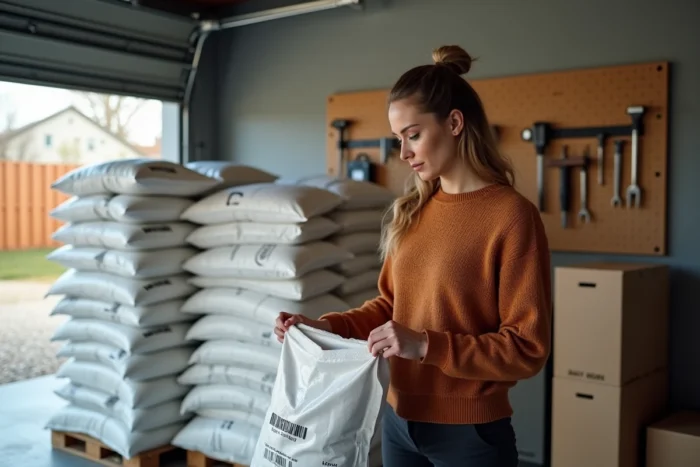
Buying Pellets in Pallets or Bulk: The Real Price Gap
Buying by the individual bag remains the most common reflex, especially for small consumers or apartment dwellers. However, the price per kilo drops significantly when buying in pallets or bulk.
Three formats coexist among pellet distributors:
- The 15 kg bag, convenient for occasional use or limited storage, but the most expensive format per kilo.
- The complete pallet (between 66 and 77 bags depending on the brands), which allows for savings of several tens of cents per bag compared to individual purchases.
- Bulk delivered by blower truck, reserved for households equipped with a silo, with a price per ton often lower than that of the pallet.
For a household that consumes several tons per heating season, switching from buying bags to pallets measurably reduces the annual bill. Bulk takes this logic even further, provided there is suitable and dry storage space.
When to Buy Pellets to Pay Less
The seasonality of prices is a lever often underestimated. Market feedback converges on one point: the window from April to June offers the lowest prices on wood pellets. Demand drops after winter, distributor stocks are full, and promotions appear more easily.
Conversely, starting in September, the rise in orders drives prices up. Occasional stock shortages in certain depots exacerbate the phenomenon. Ordering a pallet in spring, when no one is thinking about heating, remains the most effective strategy for those with a dry place to store the bags for several months.
Occasional Promotions and Arrivals
Brico Dépôt operates on a stock arrival basis, meaning that some offers last only a few days. Promotional prices around €4.29 to €4.49 per 15 kg bag have been noted during specific campaigns. Monitoring weekly catalogs and online alerts helps ensure you don’t miss these windows.
ENplus A1 or DINplus Certification: Why the Cheapest Pellet Isn’t Always the Most Economical
A pellet sold for a few cents less but manufactured without rigorous certification can end up costing more in use. Combustion quality determines the actual efficiency of the stove, the frequency of cleaning, and the lifespan of the device.
The certifications to check on the bag are as follows:
- ENplus A1: European standard that guarantees a low moisture content, high calorific value, and low ash content.
- DINplus: German certification with similar requirements, widely recognized in the French market.
- The absence of certification does not necessarily mean a bad product, but it removes any measurable guarantee on technical characteristics.
A pellet that is too moist or too ashy clogs the stove faster. Additional maintenance and loss of efficiency negate the initial savings made on the purchase price. The pellets offered by Brico Dépôt generally display ENplus and DINplus certifications, placing them in the category of reliable products based on this criterion.
Softwood or Hardwood Composition
100% softwood pellets, like those distributed by Brico Dépôt, contain more natural lignin. This resin improves the cohesion of the pellet and contributes to a slightly higher calorific value. Field feedback varies on the actual performance difference between pure softwoods and blends, but the consistency of combustion seems to favor homogeneous compositions.
The price of pellets at Brico Dépôt remains competitive as long as you move beyond the reflex of buying individual bags. Buying in pallets in spring, checking the certification on each batch, and including the delivery cost in the comparison: these three parameters weigh more heavily than the difference of a few cents between two stores.