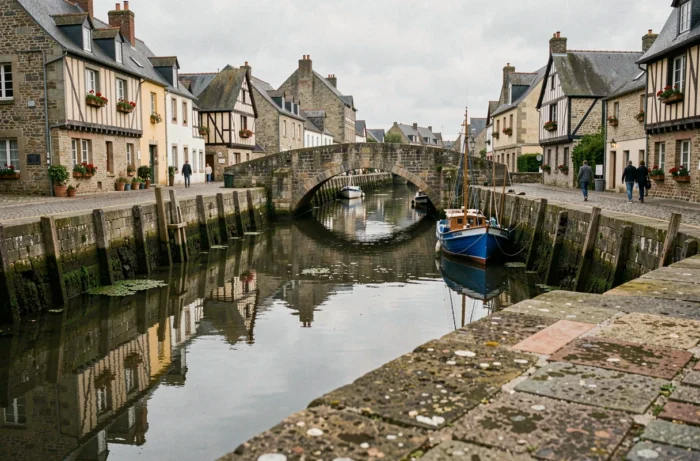
When arriving in Auray via the road from Vannes, the first instinct is often to head down towards the port of Saint-Goustan. The tightly packed half-timbered houses along the quay, the Loch River rising with the tide, the smell of galettes wafting from a creperie: it quickly becomes clear why this small town in Morbihan keeps visitors well beyond their planned stop.
The port of Saint-Goustan, a concrete starting point to discover Auray
Saint-Goustan is not a frozen backdrop. It is a neighborhood that still functions as a port, with its quays accessible on foot from the upper town via a steep staircase or by the medieval bridge that has been in place since the late 13th century. People come down to eat, to stroll, but also to understand how the town was built.
The lower town was historically dedicated to port and trading activities, while the upper town housed the ducal castle and the Saint-Gildas priory. This organization, still visible in the urban fabric, distinguishes Auray from many Breton towns where the old center is limited to a single square.
Walking along the quays allows one to spot architectural details that tell the commercial history of the place: sculpted lintels, corbels, narrow passages leading to the old trading backyards. Saint-Goustan is best explored on foot, without a map, by wandering up the narrow alleys towards the Wheel Square.
Medieval architecture and religious heritage in the upper town
The upper town of Auray, on the right bank of the Loch, concentrates the oldest traces. A feudal motte was erected there as early as the 5th century, and mentions of the Saint-Gildas priory date back to the 12th century, when Duchess Constance confirmed ducal donations including rights over the port.
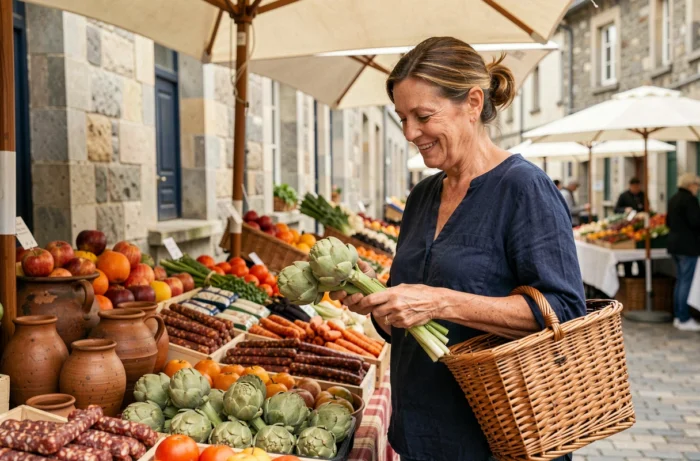
The Saint-Gildas church, with its baroque altarpiece and stained glass windows, remains the most visible heritage landmark. It can be easily found from any point in the historic center. What strikes is the contrast between the sober granite exterior and the rich interior, typical of Morbihan religious architecture.
A walking tour through medieval traces
The circuit of the historic heart passes through several points that hurried visitors often miss:
- The ruins of the ducal castle, site of the Battle of Auray in 1364, which sealed the War of Succession in Brittany and established the Montfort dynasty
- The former prison, now repurposed, whose austere facade contrasts with the neighboring half-timbered houses
- The Italian-style theater, small but remarkably preserved, which testifies to the cultural life of the town in the 19th century
The very etymology of Auray refers to ducal power: the name is thought to come from the Latin “aula regia,” meaning royal court. One literally walks in the footsteps of a forgotten regional capital.
Auray, gateway to UNESCO-listed megaliths
Classic tourist content presents Auray as a stopover to Carnac or Quiberon. The recent inclusion of the Carnac megaliths and the shores of Morbihan in the UNESCO World Heritage list changes the game. Auray is becoming a vibrant crossroads to a world heritage site, not just a simple transit point.
Auray Quiberon Terre Atlantique (AQTA) now carries a specific program around this dynamic. The event “Megaliths in Celebration,” organized in September 2026, will feature drone shows, concerts, guided tours, and discovery paths for the general public. The entire Auray area is repositioning itself as a welcoming territory for this megalithic heritage.
For visitors, this concretely means that staying in Auray provides access to the megalithic sites without experiencing the summer saturation of Carnac. The Auray River and the Gulf of Morbihan offer a complementary setting, between maritime heritage and moorland landscapes.
Auray market and the Breton art of living daily
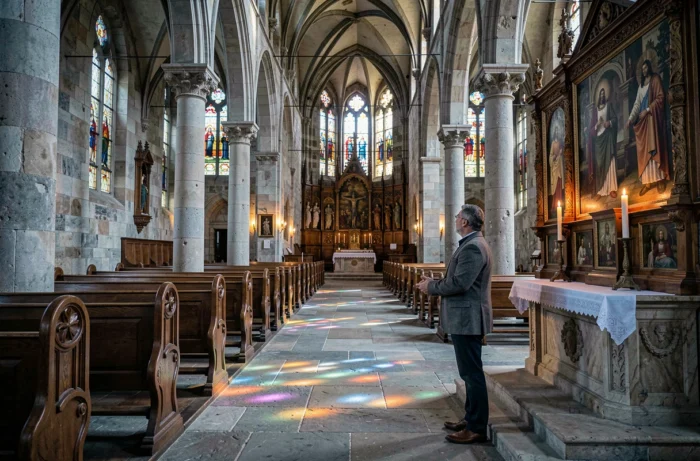
The Auray market, held in the town center, is not a reconstructed tourist market. It is a market for local producers where residents come to shop. Here, one finds the products that define the Morbihan art of living: oysters from the Auray River, farmhouse cider, salted butter, kouign-amann.
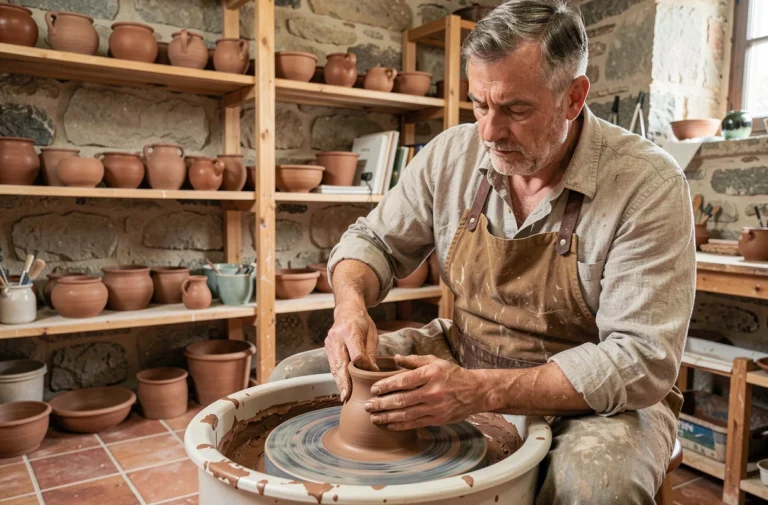
The atmosphere of the market reflects what sets Auray apart from nearby seaside resorts. Here, local life does not stop outside the tourist season. Art galleries, ceramic workshops, and artisans based in the historic center work year-round.
What is changing in the urban planning of the town center
Auray is not a city frozen in its heritage. In spring 2026, a local debate about the removal of two-way bike lanes in about twenty streets in the center revealed tensions between preserving the historical framework and adapting to soft mobility. A legal challenge was even filed against this municipal order.
This type of friction shows that Auray remains a lively city, where development choices are discussed. Opinions vary on this point depending on neighborhoods and uses, but the question of accessibility of the old center to bikes and pedestrians is far from settled.
Staying in the Auray region: what geography allows
The position of Auray in Morbihan makes it a logical base for exploring in several directions. The Gulf of Morbihan is accessible in just a few minutes to the southeast. Quiberon and the wild coast can be reached by the seasonal Tire-Bouchon train line, with work on the Auray-Quiberon section planned for autumn 2026.
Inland, the Auray region opens up to rural municipalities like Camors or Brec’h, of which Auray is historically a parochial dismemberment. These villages host heritage visits supported by the Pays d’art et d’histoire label, with regular events like the “Fridays of the Inventory.”
Auray works better as a base camp than as a day trip. The density of heritage within a limited perimeter, the proximity to the coast and the gulf, and the quality of local dining justify a stay of several days rather than a simple stop between Vannes and Quiberon.