A clayey soil that sticks to your boots after three days of rain cannot be worked like sandy soil that crumbles in the middle of summer. Turning the soil at the wrong time risks compacting it more than intended. The question is not only “when to dig,” but especially: is it really necessary to turn it, and if so, under what specific conditions?
Test the soil condition before taking out the spade
Gardening calendars often indicate “dig in the fall” or “turn in the spring” without considering the actual condition of the ground. The first thing to check is the soil moisture level at the time you plan to work.
The best time to turn the soil is the day after a good rain, when the soil is slightly moist but not waterlogged. Soil that is too dry resists tools and requires extra force, which strains the back without producing clean work. Soil saturated with water compacts under the weight of the spade and forms deep plow soles.
The handful test provides a reliable indication: take a clod in your hand and squeeze it. If it partially crumbles while retaining some cohesion, the window for working is open. If it sticks or forms a compact ball, postpone. To delve deeper into the subject, the gardening tips on Envies de Jardin detail these soil indicators according to soil types.
Turning the soil in autumn or spring: two different logics
Autumn and spring are the two classic windows, but the reasons for turning the soil differ in each case.
Autumn digging: preparing the soil for frost
Turning the soil between October and November exposes clods to the freeze-thaw cycles of winter. This natural cold work fragments compact blocks and produces fine, crumbly soil the following spring, without additional effort. It is also the time to incorporate manure or compost deeply, which will have several months to decompose.
Weeds buried during autumn turning are subjected to frost, which reduces their ability to recover. The returns vary on this point depending on the weed species, but overall, autumn digging limits the pressure from unwanted plants at the start of the vegetable garden.
Spring turning: warming and decompacting
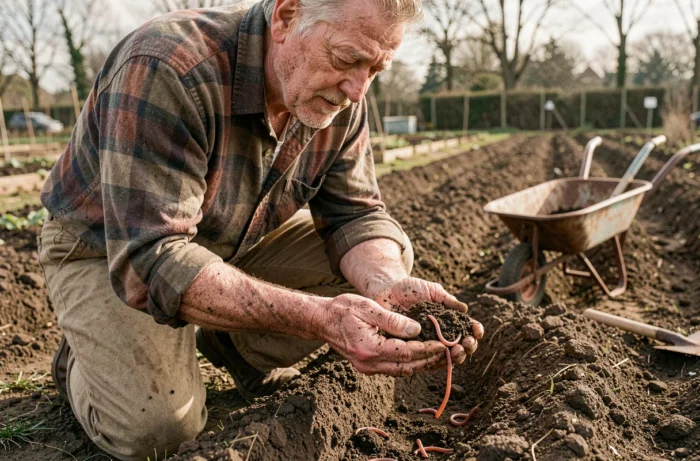
In spring, the main goal of turning is to accelerate soil warming. Soil turned in March or April captures surface heat from the sun better, promoting the germination of the first seeds. This spring digging remains superficial (about twenty centimeters) to avoid disturbing the microbial life that is resuming its activity.
Be careful not to work too early: as long as the soil sticks to the tools, it is too moist. And digging frozen soil on the surface is pointless, as the hardened layer prevents uniform work.
When not to turn the garden soil
Systematic turning every year is not a requirement. In some cases, it does more harm than good.
- A vegetable garden that has been cultivated for several seasons, with loose soil rich in earthworms, often only requires a simple raking or a pass with a broad fork, without turning the soil layers.
- In summer, digging abruptly dries out the soil and destroys the galleries of organisms that naturally aerate the ground.
- On very sandy soil that already drains well, turning disperses organic matter deeply instead of concentrating it where the roots need it.
No-dig gardening methods rely on a simple principle: add a layer of compost on the surface each year and let earthworms, fungi, and bacteria incorporate it gradually. This approach works well on already living and well-structured soils.
Digging technique in the vegetable garden: motion and depth
For effective turning without straining your back, technique is as important as timing.
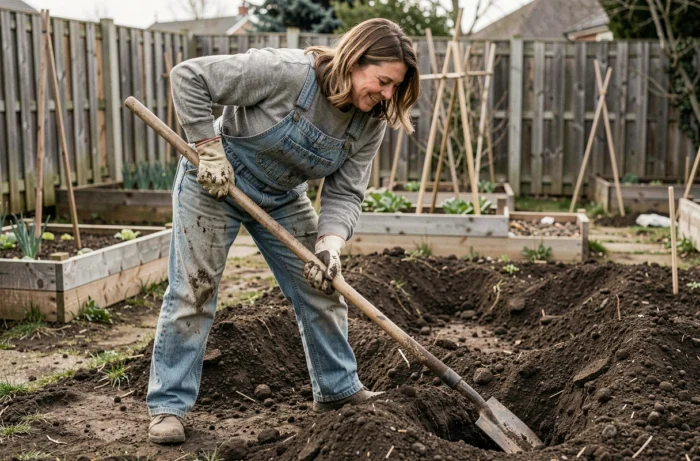
Insert the spade vertically along the entire length of the blade, then lift the clod by tilting the handle towards you. The clod will turn itself if you let it fall on its side. Do not try to crumble each clod at this stage: the coarse blocks exposed to air and frost will decompose on their own in a few weeks.
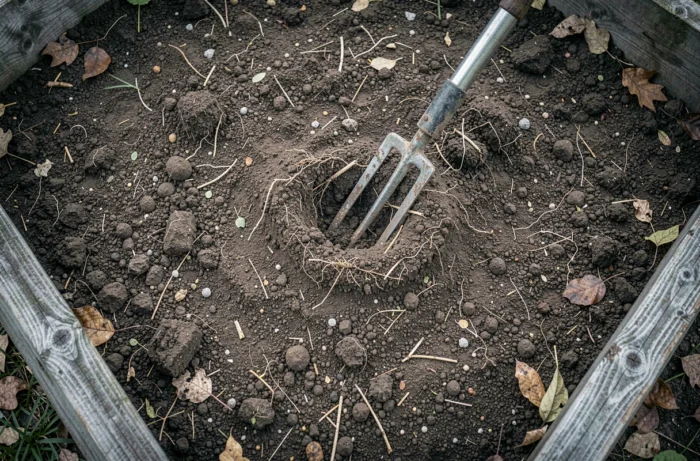
The broad fork offers an interesting alternative for already worked soils. It decompacts without reversing the layers, preserving the natural stratification of the soil. You push it in, pull the handles towards you, and step back. This movement puts less strain on the back than traditional digging.
- Flat spade: suitable for heavy, clayey soils, allows cutting through the roots of weeds.
- Fork-spade: preferable in stony soil, it penetrates without getting blocked on stones.
- Broad fork: ideal for annual maintenance work without complete layer turning.
- Rototiller: reserved for large areas or fallow land, it works quickly but disrupts the soil fauna.
After turning: what makes the difference in the vegetable garden
Turning the soil without doing anything afterward exposes bare soil to erosion and drying out. After autumn digging, a thick mulch (dead leaves, straw, chipped branches) protects the surface during winter and nourishes the soil organisms.
In spring, incorporate a green manure or mature compost into the top few centimeters before sowing. The compost on the surface mixes with the worked soil with a simple rake stroke, without re-digging.
A well-covered soil between two crops retains its structure and porosity. The next turning will be easier, or even unnecessary if the soil remains loose and aerated from one season to the next.