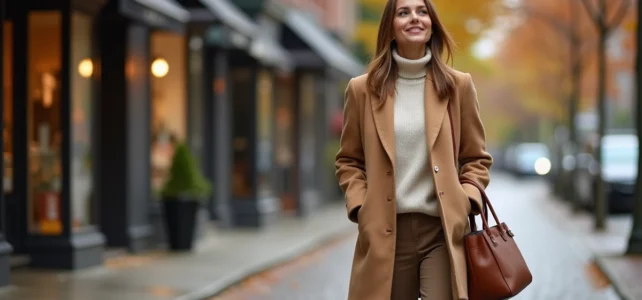
The spring-summer 2026 season is marked by a clear shift towards highly identifiable pieces. Recent fashion shows no longer offer blurred atmospheres or vaguely derived inspirations: they highlight specific products, architectural shapes, and clothing codes that were thought to be shelved. This repositioning towards the product rather than the atmosphere changes the way we approach the fashion trends of the season.
Pumps and fur in detail: the return of formal codes in fashion 2026
Among the clearest signals of this season, the return of pumps on the runways deserves attention. This piece, long associated with a strictly professional wardrobe or deemed outdated by part of the market, reappears in casual silhouettes. Designers pair them with midi skirts, wide trousers, or monochrome outfits, blurring the line between formal and everyday wear.
Fur, used in details (collars, pocket trims, bag finishes), is part of the same movement. This is not a massive return of the fur coat, but rather textured accents that add depth to simple pieces.
Field reports diverge on this point: some see it as a signal of a move upmarket, while others view it as a fleeting trend driven by a few houses. The published collections show an increasing frequency in the fashion section on Flash Wave, where these details appear in various contexts.
Structured bags and geometric silhouettes: accessories shape the look
This season’s accessories no longer play a discreet supporting role. Structured bags with architectural shapes occupy a central place in brand offerings. There is a shift towards minimalist lines, sharp angles, and rigid volumes, in contrast to the soft bags that dominated previous seasons.
This movement towards geometry also affects jewelry and shoes. Sculptural earrings, brushed metal bracelets, and sharply cut sandals contribute to this aesthetic.
- Rigid flap bags replace soft clutches in designers’ proposals, featuring matte or slightly satin materials.
- Volume jewelry (resin, thick metal, abstract shapes) is worn alone, as a statement piece rather than in accumulation.
- Square-toed shoes or architectural-soled footwear extend the geometric line down to the ground.
This shift towards highly identifiable accessories allows for the construction of a recognizable style with few pieces. A structured bag and a sculptural piece of jewelry are enough to anchor an outfit in the season’s codes, without multiplying purchases.
Vitaminized monochrome: wearing color without falling into fast fashion
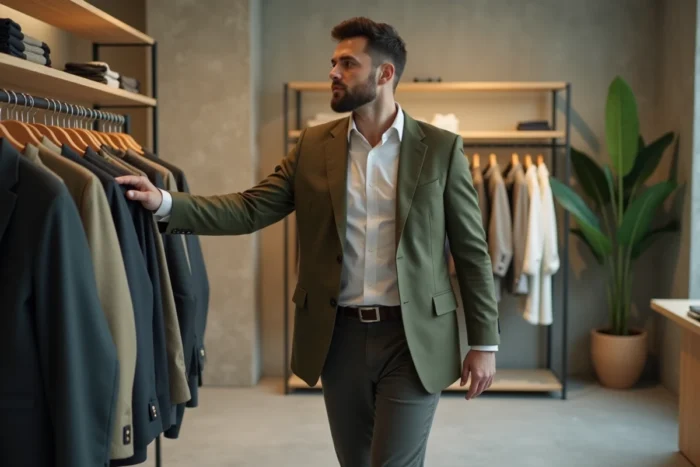
Monochrome remains a strong trend, but it is evolving. Dull or neutral versions give way to saturated or pastel variations, with a play on materials to avoid a uniform effect. A monochrome outfit in olive green, for example, gains depth if the top is linen and the bottom is brushed cotton.
This is precisely where the question of fast fashion arises. A total monochrome look bought new in low-quality synthetic materials will not withstand two washes or two seasons. However, putting together a tone-on-tone outfit from clothes already in one’s wardrobe is accessible to almost everyone.
Building a monochrome look with what you have
Most wardrobes already contain the basics: a beige pair of trousers, a cream sweater, a white shirt. Monochrome does not require purchasing a complete outfit in a specific color. It is enough to group pieces in the same color family and vary the textures.
- Pairing raw denim with a chambray shirt and a navy blazer creates a blue monochrome without any additional purchases.
- A fine-knit top worn with linen trousers in the same tone gives a cohesive result, even if the two pieces were not bought together.
- Accessories (belt, bag, shoes) in a neighboring tone unify the whole without forcing an exact match.
Reusing existing pieces by grouping them by color is the most straightforward way to follow this trend without fueling a fast purchase cycle.
Sustainable fashion trends: the limits of a still vague discourse
Sustainable fashion occupies an increasing place in brand discourse, but recycled clothing still struggles to convince a large portion of consumers. The barriers are multiple: perception of high prices, doubts about the quality of recycled materials, lack of clarity in labels.
In France, the law on fast fashion aims to regulate the practices of ultra-fast retailers. The available data does not yet allow for measuring its real impact on shopping habits. The text primarily targets very low-priced platforms, but its effects on the rest of the ready-to-wear market remain to be observed.
For a consumer who wants to wear the season’s trends without contributing to overproduction, concrete avenues exist. Buying second-hand pieces that match current codes (pumps, structured bags, saturated colors) is an increasingly accessible option. Prioritizing natural materials with a sufficiently dense weight ensures a longer lifespan than synthetic alternatives.
The 2026 season offers trends that lend themselves well to this approach: identifiable and timeless pieces rather than disposable fashion effects. A well-chosen pump, a rigid leather bag, a monochrome outfit in natural fibers will last through several seasons. This may be the most interesting signal from this collection: the most visible trends are also the ones that endure the best.