
A school trip is typically planned several months in advance, and most of that time does not focus on logistics. The challenge lies in the articulation between regulatory compliance, educational project, and group management on the ground. Training for teachers and educational staff covers these three aspects, but not all address them with the same depth or approach.
Educational exploitation of the school trip: before, during, and after the stay
Most online guides detail the preparatory phase of a school trip (budget, transport, accommodation). Very few discuss what distinguishes an educational stay from a simple outing: the pedagogical continuity between the classroom and the field.
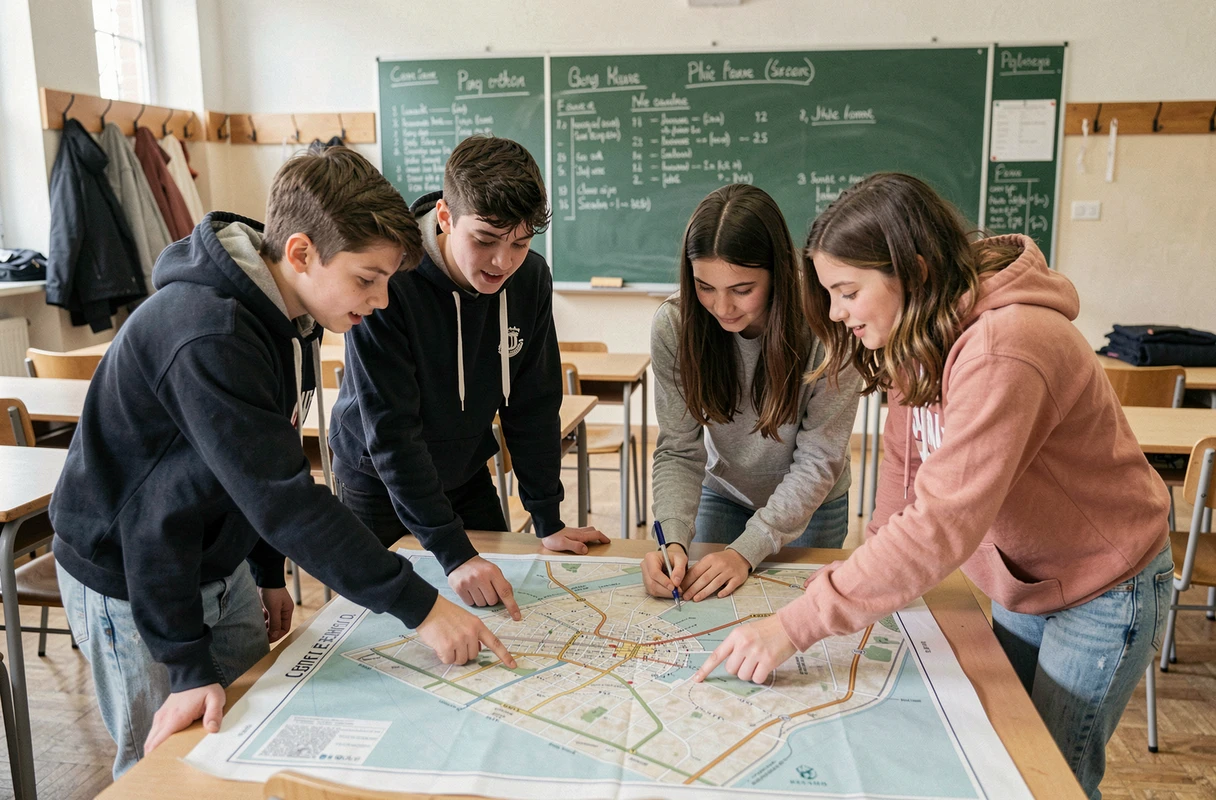
Recent feedback from the field shows that the best-trained teachers involve students from the project design stage. Co-constructing the itinerary, assigning observation or reporting tasks, and delegating logistical roles: these practices transform the trip into an active learning situation.
The follow-up after returning remains the weak link. The most comprehensive training teaches how to structure a debriefing (exhibition, collective travel journal, oral presentation in front of other classes). This work consolidates the learning outcomes and justifies the project to the administration and families. To explore the Partir en Classe website, simply check the modules that detail this articulation between preparation, fieldwork, and classroom return.
Regulatory compliance of school outings and trips abroad
The institutional framework has been strengthened in recent years. Éduscol now publishes a resource dedicated to securing mobility abroad, which sets expectations for safety and responsibility for institutions.
A useful training covers at least three regulatory dimensions:
- The mandatory authorizations depending on the type of outing (regular outing, occasional outing without overnight stay, school trip with overnight stays), each subject to a distinct regime of parental authorization and hierarchical validation.
- The supervision obligations, which vary according to the age of the students, the type of transport (coach, train, plane), and the destination country, with specific requirements for trips abroad.
- The subscription to a suitable insurance for the group, covering civil liability, repatriation, and cancellation, with criteria differing from individual family insurance.
Training offered by certified organizations (UNOSEL or L’Office, for example) incorporates these regulatory aspects into their programs. Choosing a certified travel agency guarantees compliance with services and access to ongoing assistance during the stay.
Training in communication with families and the institution
The information provided to families has become a central lever for securing the project. The most recent training dedicates an entire module to pedagogical communication with parents, far beyond a simple information meeting.
In practical terms, this involves explaining budgetary choices (why choose youth hostel accommodation over a host family, for example), detailing the day-by-day program, and presenting the learning objectives related to each activity. Families who understand the educational project are more supportive of financing and preparing their children.
On the institution side, training helps structure the presentation of the project before the board of directors or the head of the institution. A solid file articulates the explicit link between the trip and the school curricula, which facilitates obtaining validations and, if applicable, internal funding.

Choosing a school trip training suitable for your profile
Not all training addresses the same audience. A teacher organizing their first school trip in France does not have the same needs as an Erasmus coordinator experienced in mobility abroad.
Short training for first-time organizers
These modules, often offered over one to two days, cover the basics: backward planning, budget forecasting, administrative documents, choice of transport and accommodation. They are suitable for primary or middle school teachers preparing a discovery class or an overnight outing in France.
Specialized courses for trips abroad and Erasmus programs
Trips abroad add layers of complexity: passports and exit permits, specific insurance, currency management, language barriers in case of emergencies. Dedicated training also addresses the specificities of Erasmus programs, which impose a reporting and evaluation framework specific to the European Union.
The quality of a training program is measured by three criteria: the presence of an updated regulatory component, the inclusion of a module on educational exploitation after returning, and the provision of concrete tools (budget templates, authorization models, program examples). Catalogs that only offer logistics miss what differentiates a school trip from an excursion.
The choice of transport (coach for nearby destinations, train for national journeys, plane for distant foreign travel) and the type of stay (youth hostel, host family, collective accommodation) remains a pedagogical decision as much as a budgetary one. Comprehensive training helps to arbitrate these choices based on the educational project, not just the lowest price.