
The comfort of a home relies on specific technical parameters: air quality, maintenance of heating equipment, and the airtightness of joinery. These aspects affect both thermal comfort and the durability of the home.
Indoor air quality: a health issue in home maintenance
Health authorities now prioritize indoor air quality for a healthy home. Traditional cleaning (floors, surfaces, kitchen) is not enough if the home’s ventilation is malfunctioning.
A recurring point in recent maintenance guides is that ventilation grilles should be cleaned at least once a quarter. The accumulation of dust and grease in extraction vents, particularly in the kitchen and bathroom, reduces airflow and promotes humidity, mold, and even the concentration of household pollutants.
For those who want to learn everything about tamaisontonjardin.net, topics related to home and garden maintenance are addressed with practical angles complementing these ventilation issues.
Beyond ventilation grilles, checking the MVHR (mechanical ventilation with heat recovery) is part of the technical actions that both tenants and owners should integrate into their routine. A clogged MVHR no longer fulfills its role. The frequency of complete cleaning of the motor unit depends on the type of installation and the level of dirt, but a reasonable minimum remains an annual check by a professional for collective installations.
Technical maintenance of heating and hot water: actions that preserve thermal comfort
The maintenance guides published between 2022 and 2024 by construction and renovation stakeholders have evolved the notion of a well-maintained home. Regular cleaning remains important, but technical maintenance takes center stage.
Several operations consistently appear in these schedules:
- Seasonal bleeding of radiators before restarting the heating, to avoid circulation noises and cold spots in living areas.
- Annual boiler inspection (a regulatory requirement for gas and oil boilers), which ensures both safety and efficiency of the device.
- Maintenance of the hot water tank and its safety group, often overlooked even though a clogged safety group can cause leaks or excessive consumption.
- Checking the electrical installation and smoke detectors, whose proper functioning is crucial for the daily safety of the home.
These actions are not merely superficial comfort. A poorly bled radiator means a room takes longer to heat and an energy bill that rises without apparent reason. A hot water tank whose anode is never checked will eventually corrode, leading to water damage.
Airtightness of joinery and heat loss
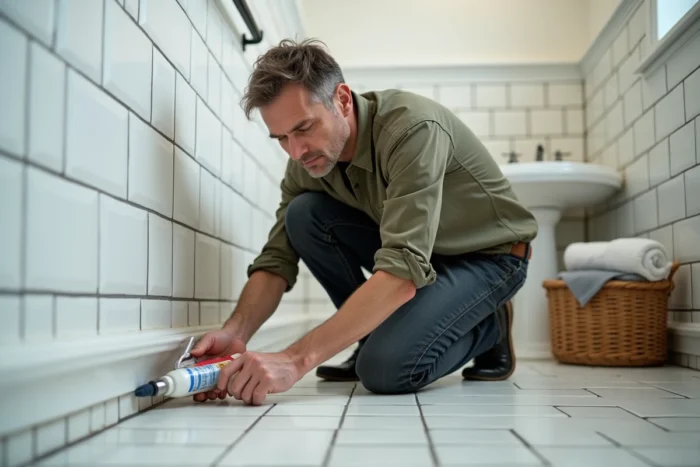
Checking the airtightness of windows and doors is one of the technical points mentioned in recent guides. Worn joinery seals can represent a significant source of thermal loss, particularly in older homes.
Replacing a window seal is inexpensive and can be done without specialized tools. The identification is simple: a flickering lighter flame near the closed frame indicates an airtightness issue. The available data does not allow for precise quantification of the savings achieved, as it depends on the type of joinery, exposure, and heating method. However, the immediate gain in perceived comfort is clear, especially in wind-exposed rooms.
Seasonal home maintenance: structuring tasks to avoid forgetting
The main difficulty in maintaining a house is not a lack of will but the absence of planning. Technical tasks (bleeding radiators, cleaning gutters, checking detectors) are easy to postpone because they do not yield immediate visible results.
A structured seasonal schedule transforms maintenance into a predictable routine. Professional guides propose a breakdown into four periods:
- Autumn: bleeding radiators, checking heating, inspecting window seals, cleaning gutters.
- Winter: monitoring energy consumption, checking ventilation, maintaining the hot water tank.
- Spring: cleaning ventilation grilles, inspecting the roof after bad weather, maintaining the garden and exteriors.
- Summer: checking the electrical installation, preventive treatment against humidity, refreshing seals and exterior paints.
This type of planning is not new in itself. What changes is the systematic integration of technical maintenance at the same level as regular cleaning. Maintaining a comfortable home combines cleaning and technical maintenance, without hierarchy between the two.

Home insurance and maintenance: an underestimated link by tenants
Home maintenance has direct consequences on home insurance. Most contracts require the policyholder, whether owner or tenant, to keep the property in good condition.
A water damage caused by a hot water tank that has never been maintained, a fire linked to a malfunctioning smoke detector: in these situations, the insurer may invoke a maintenance deficiency to reduce or deny compensation. The clauses vary from one contract to another, but the principle remains constant.
For tenants, the question arises with an additional nuance. Routine maintenance (including bleeding radiators, cleaning ventilation grilles, replacing seals) is their responsibility according to current regulations. In contrast, structural repairs remain the owner’s responsibility. The boundary between the two is not always clear, and disputes on this point are common.
Keeping a written record of maintenance operations performed (date, nature of the intervention, any invoices) serves as simple protection in case of a claim. This documentation reflex takes a few minutes and can make a difference during discussions with an insurer or landlord.